National participation and experiences from #COP26
The 26th Conference of the Parties to the UN Framework Convention on Climate Change #COP26 held in Glasgow in the first two weeks of November was attended by a high Macedonian delegation represented by the President Stevo Pendarovski with an advisory team, the Minister of Environment and Physical Planning Naser Nuredini, with an advisory and expert team, the Ambassador of the Republic of North Macedonia to the United Kingdom and a representative of the Ministry of Foreign Affairs as well as representatives from the Cabinet of the Deputy Prime Minister of Republic of North Macedonia in charge of economic affairs.
Preparations for the summit were lengthy, with governments around the world coordinating through their embassies on the global commitments to be presented and supported during the Glasgow summit.
The Ministry of Environment and Physical Planning, in its role of a national focal point for the UNFCCC, in the preparatory period worked closely with the United Kingdom as chair of this year's Conference of the Parties to the UN Framework Climate Change Convention to ensure adequate attendance and presentation of national ambitious commitments at the Summit.
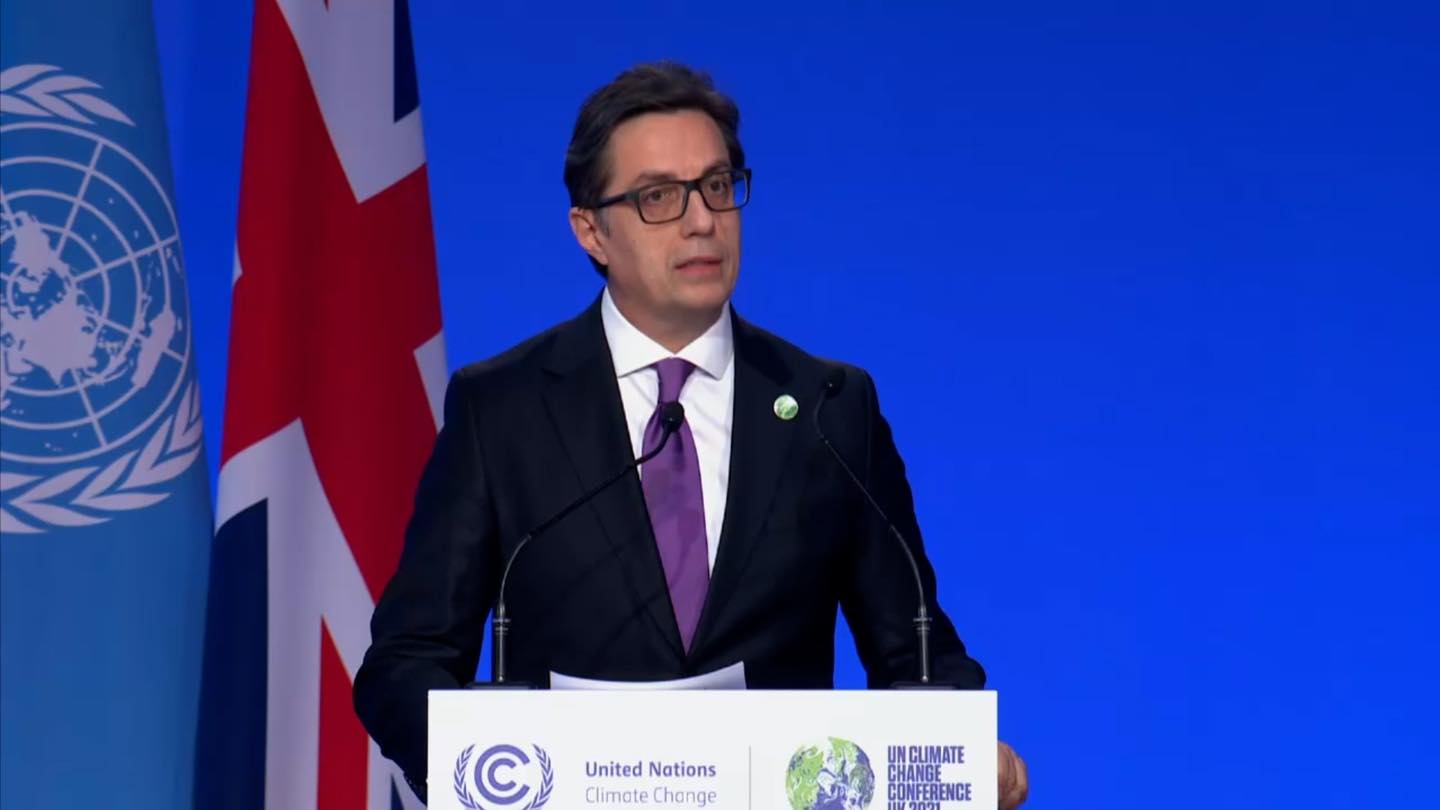
The Macedonian delegation had a very ambitious agenda and participated in several major and side events. In accordance with the nationally adopted climate policies, it clearly expressed its support for the initiatives for global joint action in relation to transition to clean energy, phasing out coal and forest and land management. At the invitation of the United States, our country has joined the initiative to limit methane emissions that have already been analyzed during the preparation of our NDC, especially those coming from waste and livestock management, and has also joined the "green governments" global initiative.
The country has also acceded to the Joint Declaration of World Leaders on Action on Forest and Land Use and to the Energy Section of the Joint Statement on the Breakthrough Agenda.
At the invitation of the Greek Government, Minister Nuredini presented the national analysis of the impacts of climate change on cultural heritage, and participated in the presentation of the Powering Past Coal Alliance. Also, together with the Minister of Education and Science, he presented the joint activities for mainstreaming climate change in the educational process.
Our country also hosted a special international event within the accompanying program where a discussion was opened to share experiences and find the right methods for resolving the climate crisis together with all stakeholders in society.
If we consider the main conclusions that emerged from this world conference, especially important are the adoption of the Glasgow Climate Pact, the transparency decisions that operationalize the Paris Agreement and provide the framework for monitoring and reporting on accomplishments of the countries in achieving the objectives of the Paris Agreement and their national contributions. For Republic of North Macedonia, this means that it will need to prepare future biannual transparency reports in line with the decisions of this COP. This includes Article 6, which establishes a solid framework for countries to exchange carbon credits through the UNFCCC.

Decision 1 / CMA.3 on the Glasgow Climate Pact, combined with increased ambition and action by countries, means that the target of 1.5 Co remains in sight, but will be achieved only with coordinated and immediate global efforts in the coming decade.
The Glasgow Climate Pact will accelerate climate action. All countries have agreed to enhance and strengthen their current emissions targets by 2030, known as Nationally Intended Contributions (NDCs), in 2022. This will be combined with an annual political roundtable to review the Global Progress Report and with 2023 Summit of Leaders.
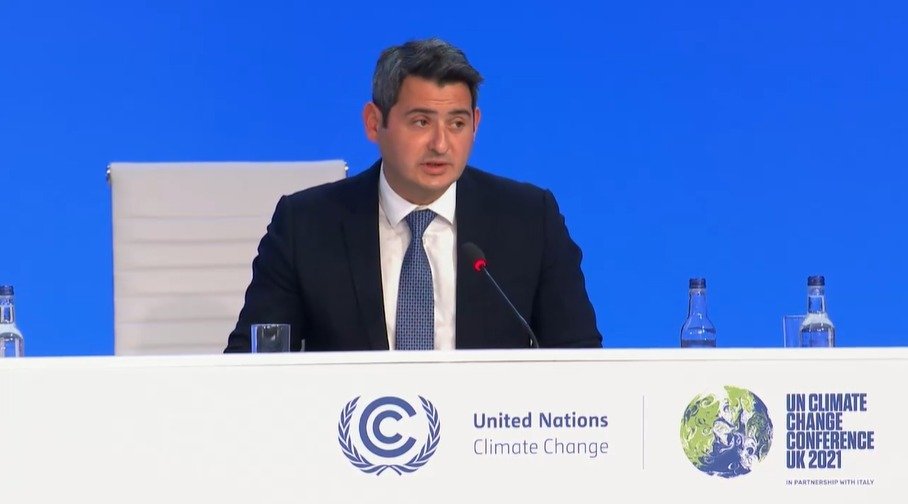
And for the first time, listening to calls from civil society and countries most vulnerable to climate change, the COP agreed to act to gradually reduce fossil fuel use.
The COP decisions have gone further than ever in recognizing and dealing with the losses and damages of existing climate change impacts.
There were also efforts to significantly increase financial support through the Adaptation Fund as developed countries were called upon to double their support for developing countries by 2025, which is an opportunity for our country as well, given the constraints on priorities for small island states and other most vulnerable states.
All in all, this was a COP that was conducted in very unusual circumstances of a global pandemic, with a large number of participants and under strict health protocols.
-
Climate finance
21-01-2022 -
Tackling Climate Change & Air Pollution in the City of Skopje
30-04-2018 -
Tackling Climate Change & Air Pollution in the City of Skopje
22-03-2018 -
Micronarratives
08-06-2022
{{"article.lastestPosts"|translate}}
-
The Chamber of Commerce of North Macedonia has created the first decarbonization guide for small businesses in the country
30-10-2025 -
COP29 UN Climate Conference Agrees to Triple Finance to Developing Countries, Protecting Lives and Livelihoods
02-12-2024 -
We are building partnerships to implement a just energy transition
06-12-2023 -
Energy transition will be accelerated through the Green Financing Facility
06-12-2023


 Мод за знаковен јазик
 Говорен асистент
 Означи линкови

 Зголеми маус