LOW-CARBON VIRTUAL STUDY TOUR
Virtual Study Tour Will Take Macedonian Climate Experts to Prague
On November 11, more than 20 Macedonian climate change experts will “travel” to the Czech Hydrometeorological Institute (CHMI) in Prague to meet their counterparts in two days of discussions about improving greenhouse gas (GHG) inventories, with an emphasis on dual reporting to the UN Framework Convention on Climate Change (UNFCCC) and the European Union. The study tour will include both video conferencing and live streaming to create the feeling of being on site.
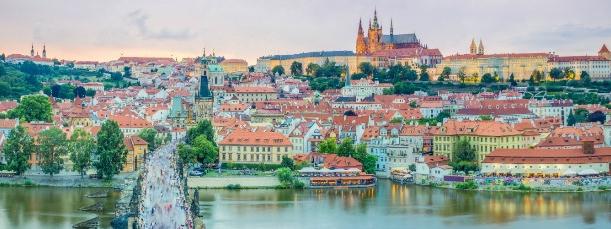
The virtual study tour is being funded by the GEF-funded project “Strengthening Institutional and Technical Capabilities to Enhance Transparency in the Framework of the Paris Agreement,” which is implemented by UNDP North Macedonia. “When the COVID-19 pandemic started, we had to think creatively about how to build capacity without in-person meetings,” said Pavlina Zdraveva, the project manager. “We have held more than 100 events online, and we have been amazed at the high level of participation. Unfortunately, we are still unable to send experts abroad due to the pandemic. Therefore, we wanted to organize something beyond a videoconference call or webinar for them. This study tour will include a walk-through of the facilities and other dynamic experiences for the participants, who will be in Berovo, and it may also include a tour of other sites they might see on a trip to Prague.”
The Czech Republic, which joined the European Union in 2004, reports each year on its emissions to the UNFCCC and to the European Commission. CHMI is responsible for collecting its own data and data from other institutions, compiling the GHG inventory, and producing reports for the Czech Government. North Macedonia’s candidate country status and membership in the Energy Community mean that climate experts will have to manage these types of reports as well. “We identified the Czech Republic as a good counterpart for the study tour because they have already had to adapt to producing multiple inventory reports for different organizations, and they can explain how they manage that process on a practical, day-to-day basis,” said Susan Legro, the project’s Chief Technical Advisor. “Every country strives to improve data collection and analysis, and I think it will be especially interesting for the experts from both countries to share the challenges that they are currently facing in reporting on GHG emissions in agriculture, waste, and forestry. The high-level of expertise of the Macedonian participants will allow for some very substantive discussion, and because of the virtual format, more participants can attend and benefit from this discussion,” she added.
GHG inventories are a key part of climate action, because they provide a way of understanding how many greenhouse gases a country emits over time. Under the Paris Agreement of the UNFCCC, countries have established nationally determined contributions (NDCs), or commitments about how they will reduce GHGs. Inventories are a tool they can use to measure progress against these commitments. North Macedonia has committed to an 82% conditional reduction in net GHG emissions in 2030 compared to 1990.
-
Climate finance
21-01-2022 -
Tackling Climate Change & Air Pollution in the City of Skopje
30-04-2018 -
Tackling Climate Change & Air Pollution in the City of Skopje
22-03-2018 -
Micronarratives
08-06-2022
{{"article.lastestPosts"|translate}}
-
The Chamber of Commerce of North Macedonia has created the first decarbonization guide for small businesses in the country
30-10-2025 -
COP29 UN Climate Conference Agrees to Triple Finance to Developing Countries, Protecting Lives and Livelihoods
02-12-2024 -
We are building partnerships to implement a just energy transition
06-12-2023 -
Energy transition will be accelerated through the Green Financing Facility
06-12-2023


 Мод за знаковен јазик
 Говорен асистент
 Означи линкови

 Зголеми маус