Circular Economy - Worldwide Actual Concept
The worldwide actual circular economy concept moves from present linear economy concept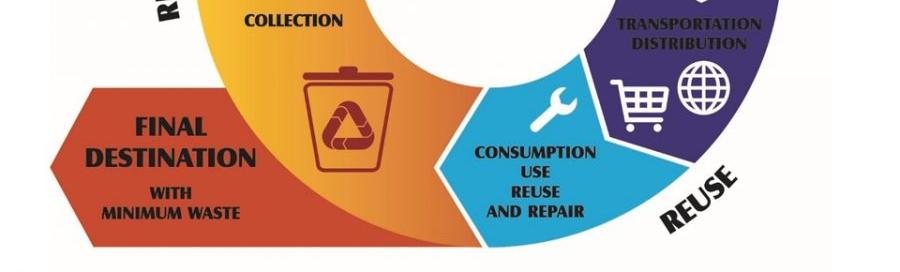
- {{"article.by"|translate}} Prof. Valentina Gechevska
- {{"article.posted"|translate}} 01-09-2020
Circular Economy - Worldwide Actual Concept
The worldwide actual circular economy concept moves from present linear economy concept
The worldwide actual circular economy concept moves from present linear economy concept, highly resource depleting systems with high emissions, waste generation and high impacts on natural capital, towards circular, less wasteful systems that use resources more efficiently and sustainably, while providing work opportunities and a high quality of life.
The circular economy concept is a key contribution to the 2030 Agenda for Sustainable Development, its Sustainable Development Goals and other commonly agreed international targets under the Paris Agreement with the United Nations Conventions related to climate change priorities.
Natural resources underpin national economies, provide crucial raw materials for everyday life, and are necessary to almost every sector of the global economy. In particular, given the size of the demand, raw materials (including both primary and secondary raw materials obtained through recycling) will continue to play a key role in the global economy.
Context of European Green Deal
Reducing the consumption footprint and increasing the circular material use rate is a particular priority, which should also be seen in the context of the new European Green Deal strategy, Europe’s new agenda for sustainable growth.
European Green Deal is a roadmap for making the Europe first climate neutral continent by 2050 and transforming the EU into a modern, resource-efficient and competitive economy where no net emissions of greenhouse gases by 2050 and circular economic growth decoupled from resource use. This will happen by turning climate and environmental challenges into opportunities across all policy areas and making the transition just and inclusive for all.
Unsustainable trends of global resources using
Current linear economic activities are going on with:
• input of taking different raw (primary or secondary) materials depend of the products,
• output of materials that are extracted, traded and processes into goods and, at end of lifecycle, disposed as waste or emissions.
During last five decades, the annual global extraction of these materials more than tripled, rising from 27 billion tons in 1970, to 93 billion tons in 2018 (Fig.1). Since 2000, extraction rates have accelerated, driven by technologies & infrastructure investments and higher living standards, growing by approximately 3.5% per year.
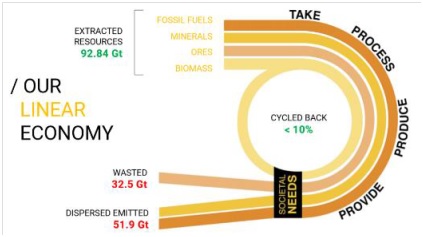
Figure 1: Current patterns of linear economic activity
(according to the UNEP (2019), Circularity in the Economy of Tomorrow - Circle Economy)
According to OECD, living standards will continue to increase in all countries with projected increase in global population and global per capita income levels. That is expected to increase exploitation of raw materials with intensify competition for certain of them and to have strong impact on the environment and climate change at all.
In the OECD scenario, the use of raw material resources (metals, non-metallic minerals, biomass and fossil fuels) for providing products and services through extraction, processing and production, is projected to grow from about 90 billion tons in 2018 to roughly double to 170 billion tons in 2060 (Fig.2).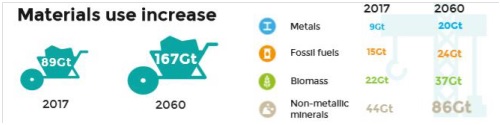
Figure 2: Materials use increase 2017-2060
(according to the OECD (2019), Global Material Resources to 2060)

-
Climate finance
21-01-2022 -
Tackling Climate Change & Air Pollution in the City of Skopje
30-04-2018 -
Tackling Climate Change & Air Pollution in the City of Skopje
22-03-2018 -
Micronarratives
08-06-2022
{{"article.lastestPosts"|translate}}
-
The Chamber of Commerce of North Macedonia has created the first decarbonization guide for small businesses in the country
30-10-2025 -
COP29 UN Climate Conference Agrees to Triple Finance to Developing Countries, Protecting Lives and Livelihoods
02-12-2024 -
We are building partnerships to implement a just energy transition
06-12-2023 -
Energy transition will be accelerated through the Green Financing Facility
06-12-2023


 Мод за знаковен јазик
 Говорен асистент
 Означи линкови

 Зголеми маус