Agriculture and Fossil Fuels Mainly Responsible for Rising Levels of Methane Emissions
Methane is one of the most potent and dangerous greenhouse gases
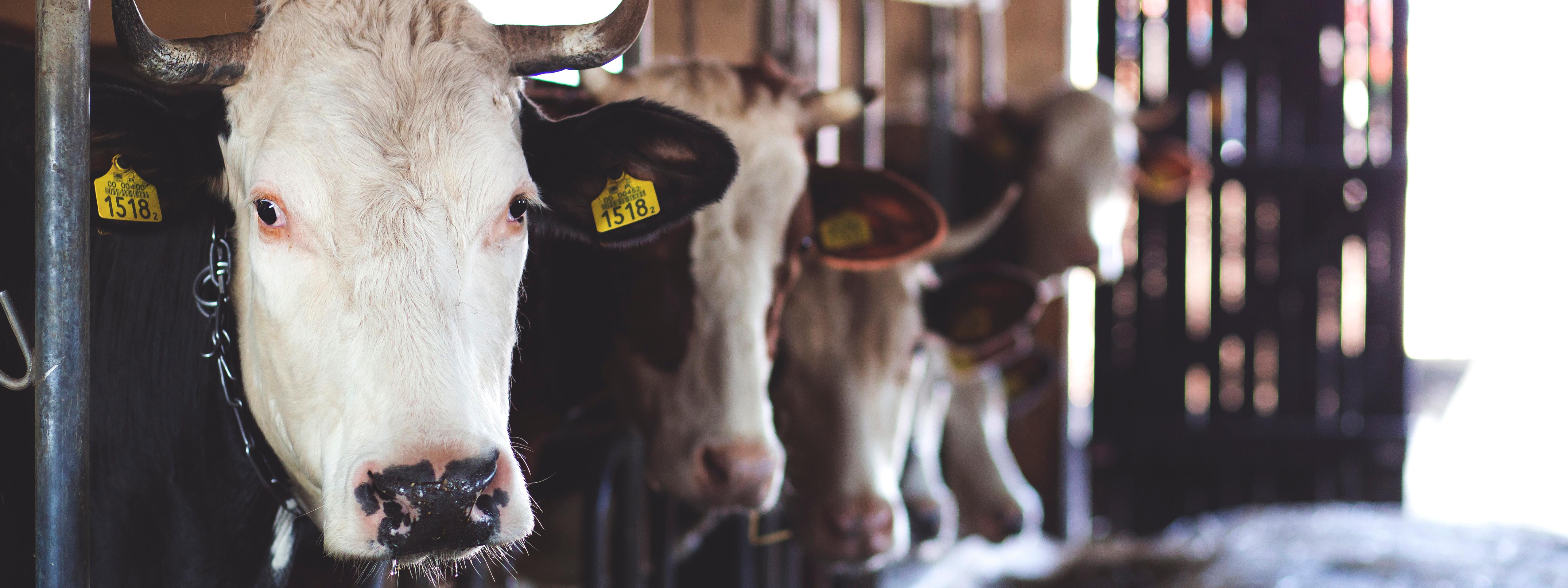
Methane, one of the most dangerous and potent greenhouse gases has risen to its highest concentration levels on record according to a new study. The main culprits? Agriculture and the burning of fossil fuels.
In 2019, our CO2 emissions from man-made sources such as fossil fuel burning and deforestation reached approximately 43 billion metric tonnes. Our lack of substantial action to reduce emissions hasn’t slowed down the warming of the planet and we currently find ourselves at 1.1℃ warmer than pre-industrial levels. Going beyond 1.5℃ will be catastrophic and, at this rate, we’re on track to reach 3℃ or even 4℃.
Methane emissions are also on the rise as its global concentrations reached an average of about 1875 parts per billion at the end of 2019. This is more than two-and-a-half times higher than preindustrial times. Even though CO2 levels in the atmosphere are much higher than methane, its ability to absorb infrared radiation much more efficiently makes it 86 times more potent for global warming than CO2 on a 20-year timescale.
A new study published on Environmental Research Letters analysed global methane levels from 2017 (the latest statistics available) and compared them to the 2000-2006 period.
Agriculture, waste and fossil fuels
The most significant finding from the study is that over half of the methane found in the atmosphere comes from anthropogenic (human-made) sources, mainly agriculture, waste, and the extraction and use of fossil fuels.
In 2017, agriculture and waste processes contributed to 60% of the methane concentration increase mainly from enteric fermentation (the digestive process of livestock), manure and landfills. Fossil fuels were responsible for 40% increase mainly from coal mining, oil and gas.
Natural methane emissions
A lot of methane is also released from natural sources such as wetlands and freshwater ecosystems. The research found that the amount of methane in the atmosphere from these sources hasn’t really changed since the 2000-2006 period. It’s also important to note however that these natural sources also tend to have a high potential for capturing and storing methane and other greenhouse gases. In 2017, the methane concentration from natural sources accounted for less than 40% of the total amount.

The global methane budget for the year 2017 based on top-down methods for natural sources and sinks (green), anthropogenic sources (orange), and mixed natural and anthropogenic sources (hatched orange-green for ‘biomass and biofuel burning’).
Methane emissions around the world
The level of methane emissions increase in the different sectors was not uniform across the globe. South and Southeast Asia, including China, saw a significant increase in emissions from agriculture, waste and fossil fuel sectors and the United States also reported an increase in fossil fuel emissions. Europe, on the other hand, was the only continent where methane emissions appear to be decreasing. Of course, with the outsourcing of large industries like agriculture and mining outside of rich continents like Europe to other parts of the world, this comes as no surprise.
Rob Jackson, one of the study’s main authors and the chairperson of the Global Carbon Project, highlighted the importance of tackling methane emissions through effective policy which is currently non-existent:
“CO2 is still the beast to slay but warming from methane is the next most important. Acting aggressively on methane can buy us time to address CO2 and shave half a degree off the peak temperature”
The Author: JD Farrugia
JD has been working in project and campaign management roles since 2010, mostly within civil society but also in the private sphere, as well as the arts and culture sector. Some of these roles include: directing a CSO focused on sustainable fisheries, setting up and coordinating civil society programmes, and coordinating the programme of a community theatre. JD has an M.Sc in Environmental Management & Planning and a Bachelor's degree in Psychology, both from the University of Malta. He is currently involved in various projects related to environmental causes as well as artistic projects in Malta, North Macedonia and on a European level.

-
Climate finance
21-01-2022 -
Tackling Climate Change & Air Pollution in the City of Skopje
30-04-2018 -
Tackling Climate Change & Air Pollution in the City of Skopje
22-03-2018 -
Micronarratives
08-06-2022
{{"article.lastestPosts"|translate}}
-
The Chamber of Commerce of North Macedonia has created the first decarbonization guide for small businesses in the country
30-10-2025 -
COP29 UN Climate Conference Agrees to Triple Finance to Developing Countries, Protecting Lives and Livelihoods
02-12-2024 -
We are building partnerships to implement a just energy transition
06-12-2023 -
Energy transition will be accelerated through the Green Financing Facility
06-12-2023


 Мод за знаковен јазик
 Говорен асистент
 Означи линкови

 Зголеми маус